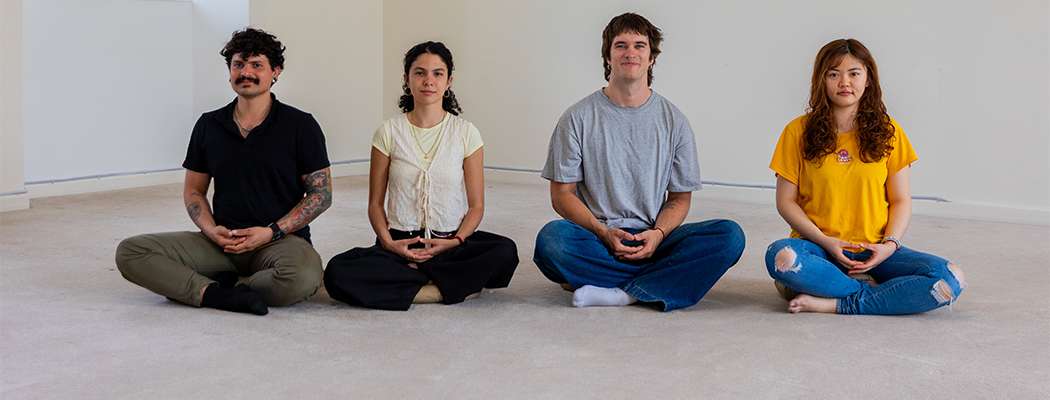
Learn how to meditate
Meditation is a method for familiarizing our mind with virtue. The more familiar our mind becomes with virtue, the calmer and more peaceful it becomes. When our mind is peaceful, we are free from worries and mental pain, and we experience real happiness.
If we train our mind to become peaceful, we shall be happy all the time, even in the most difficult circumstances; but if our mind is not peaceful, we shall not be happy even if we have the most pleasant external conditions. It is therefore important to train our mind through meditation.
There are two types of meditation: analytical meditation and placement meditation. Analytical meditation involves contemplating the meaning of Dharma instructions that we have heard or read. By contemplating these instructions deeply, we shall eventually reach a definite conclusion or cause a particular virtuous state of mind to arise. This conclusion, or virtuous state of mind, is the object of placement meditation.
Having found our object through analytical meditation, we then concentrate on it single-pointedly for as long as possible, so that we become deeply familiar with it. This single-pointed concentration is placement meditation. Analytical meditation is often called “contemplation”, and placement meditation is often called “meditation”.
Placement meditation depends upon analytical meditation, and analytical meditation depends upon listening to or reading Dharma instructions.
If we practise patiently in this way, our distracting thoughts will gradually subside and we shall experience a sense of inner peace and relaxation.
Our mind will feel lucid and spacious, and we shall feel refreshed. When the sea is rough, sediment is stirred up and the water becomes cloudy, but when the wind dies down, the mud gradually settles and the water becomes clear.
In the same way, when, through concentrating on the breath, we calm the continual flow of our distractions, our mind becomes exceptionally clear and lucid. We should remain in this state of mental calm for a while.
Although breathing meditation is only a preliminary meditation, it can be very powerful. Through this practice we can understand from our own experience that simply by controlling our mind we can experience inner peace and contentment, without having to depend in any way upon external conditions.
This feeling of contentment and well-being helps us to cope with the busyness and difficulties of daily life. Much of the stress and tension we normally experience comes from our mind, and many of our problems, including health problems, are caused or aggravated by this stress. By meditating on the breath for just ten or fifteen minutes each day, we shall be able to reduce this stress.
Our mind will feel calm and spacious, and many of our usual problems will disappear. We shall find it easier to deal with difficult situations, we shall naturally feel warm and well-disposed towards others, and our relationships will gradually improve.
Our next meditation classes to practise and improve your meditation skills




Save money
learn about our membership
Upcoming events


Our upcoming meditation sessions

Sun 15 Nov


Fri 15 Jan
Fri 29 Jan

Articles meditation



Articles buddhism