Kadampa Buddhism
The Founder
Geshe Kelsang Gyatso Rinpoche is an internationally renowned Buddhist monk and meditation master.
Over the past 40 years, his great achievement has been adapting the presentation of teachings dating back more than 2,600 years to our modern world.

Geshe-la, as his students affectionately call him, has dedicated his life to the revival of Kadampa Buddhism in our modern world.
From the age of eight, Geshe-la studied in depth at the great monastic universities of Tibet and earned the title of “Geshe”, meaning “spiritual friend”.
Under the guidance of his Spiritual Guide, Kyabje Trijang Rinpoche, he spent the following 18 years in meditation retreat in the Himalayas.
In 1977, he accepted an invitation to teach at a university in England, where he lived and taught until 2009, giving teachings and guidance to a continually growing group of disciples.
He is the author of 23 remarkable books that perfectly convey the ancient wisdom of Buddhism to our modern world.
He teaches that all the problems we face in the world stem from the mind, and that the only way to solve them and find true happiness, both for ourselves and for society as a whole, is to learn to improve our mind.
“Without inner peace, outer peace is impossible.”
“It is only by establishing peace within our own mind, and helping others to do the same, that we can hope to achieve peace in the world.”
Geshe Kelsang Gyatso, Transform Your Life
Kadampa Buddhism
Kadampa Buddhism is a school of Mahayana Buddhism founded by the great Indian Buddhist master Atisha (982-1054).
“Ka” means “word” and refers to the teachings of Buddha, and “dam” refers to Atisha’s special instructions, the lamrim, known as the “stages of the path to enlightenment”.
The Kadampa tradition was widely promoted in Tibet by Je Tsongkhapa and his disciples, known as the “New Kadampas“.
These disciples were not only great scholars, but also spiritual practitioners of immense purity and sincerity.
After Je Tsongkhapa, the lineage of the New Kadampas flourished for centuries, continuing right up to the present day.
A Modern Buddhism
In recent decades, Buddhism has been widely promoted throughout the world by Geshe Kelsang Gyatso.
He dedicated his life to giving detailed teachings, writing numerous texts that reveal the depth of Kadampa Buddhism, and founding the New Kadampa Tradition, the International Kadampa Buddhist Union (NKT-IKBU).
The New Kadampa Tradition is an association of over 1,300 Kadampa Buddhist centres and branches around the world. It draws on the ancient Kadampa Buddhist masters and aims to preserve Kadampa Buddhism for many generations to come.
“A Kadampa is a person who takes all of Buddha’s teachings as personal advice to be integrated into their daily life.”
Geshe Kelsang Gyatso
Each of these centres offers study programmes based on Buddhist psychology, philosophy and meditation, as well as courses, for practitioners of all levels.
Particular importance is given to putting Buddha’s teachings into practice in daily life, so that everywhere in the world our everyday problems can be solved and everyone can experience lasting peace and happiness.
Above all, this is an international presentation open to everyone, not rooted in any particular country or culture.



The National Spiritual Director

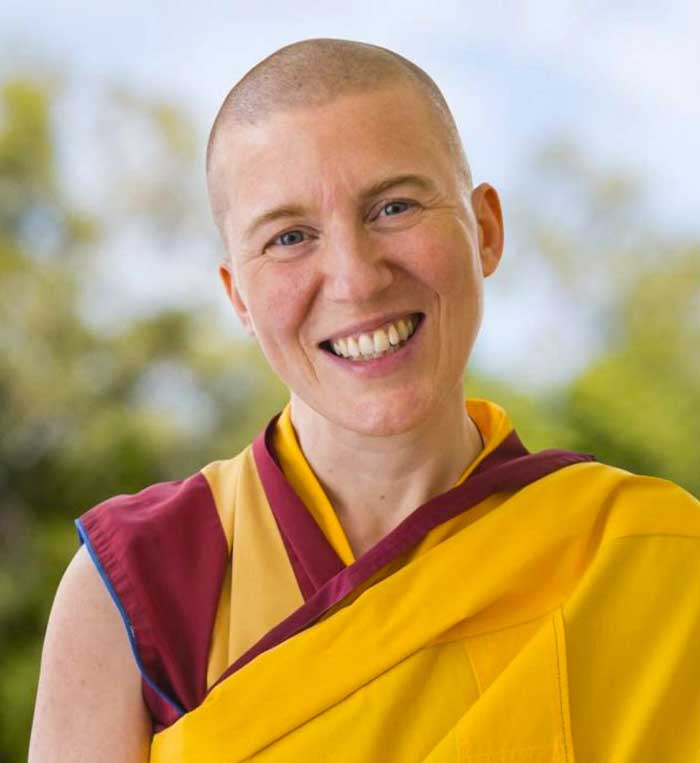
Kadam Bridget Heyes is the NKT-IKBU National Spiritual Director for the UK.
She is known for her powerful teachings, compassionate heart, and deep understanding of Buddha’s wisdom advice. Her teachings are exceptionally clear and she presents profound ideas in a way that are easy to practice and integrate into daily life.
As a mother of two, she has a special insight into how to bring Buddhism alive to meet the demands of a busy modern life. Kadam Bridget shows an inspiring example for everyone on the spiritual path. She is Resident Teacher at Nagarjuna Kadampa Meditation Centre.
Our Mother Centre
Manjushri Kadampa Meditation Centre is the Mother Centre of the New Kadampa Tradition, located at the historic Conishead Priory near Ulverston in the Lake District, UK.
Courses, meditation classes, and retreats are organised there throughout the year, led by internationally renowned teachers.
Whether it’s for a weekend retreat, a peaceful stay in the Lake District, or joining a volunteering program, Manjushri KMC offers a tranquil sanctuary, open to all and home to the first Kadampa Temple for World Peace.


Find a Kadampa meditation centre in the UK
Each meditation centre is independent and has several branches within its own region. Please consult their website for the addresses of these branches.
To find a Kadampa meditation centre worldwide:
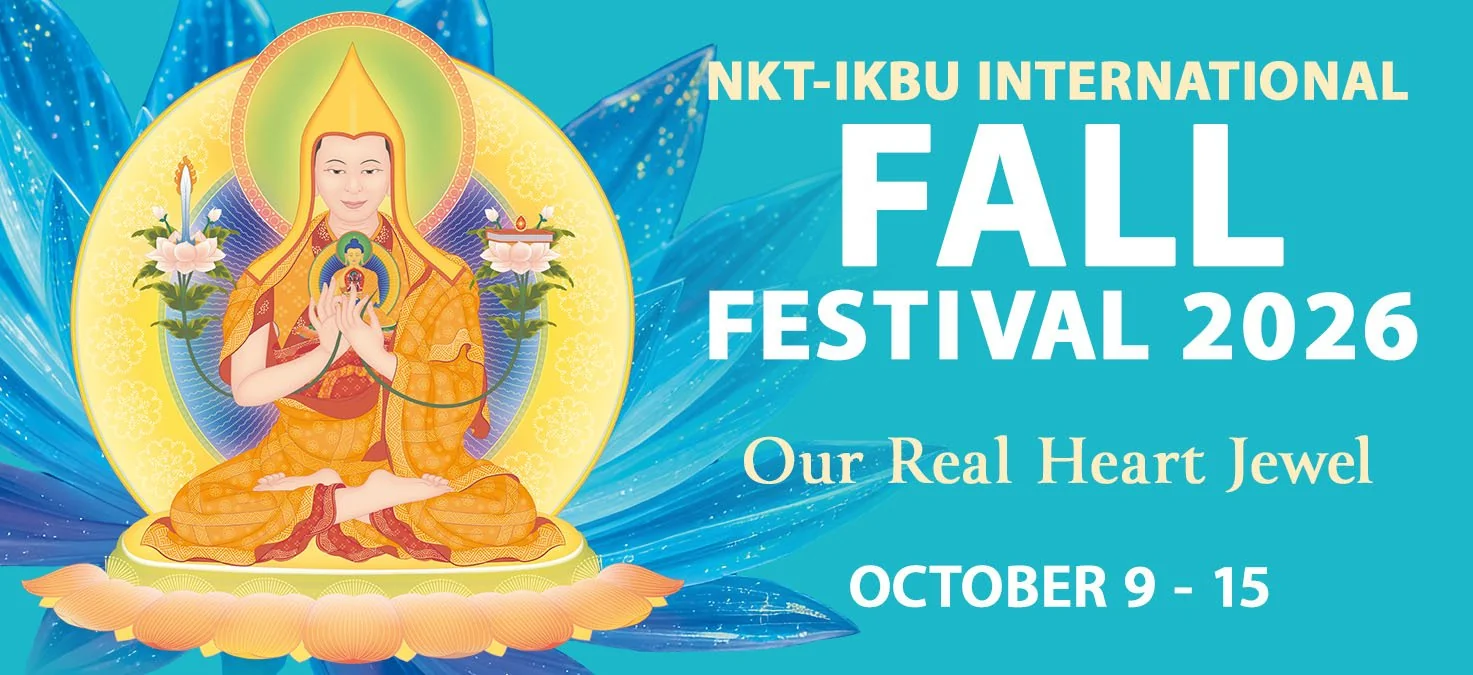
Festivals, Spiritual Holidays for Everyone
Learn more about Buddhism and meditation in our FAQ
Filter the FAQ by category:
- All
- Community and Lifestyle
- Core Beliefs and Practices
- Learn More and Get Involved
- Spiritual Teachers and Guidance
- Understanding the Basics
###### IMPORTANT NOTES ######The CSS formatting the FAQ is stored in the CSS of the current global element (CSS button in the black bar at the top of the Avada editor)
Make sure to leave the “dummy” FAQ element on the NKT page of consumer sites to enable loading of FAQ JS + CSS
There are several simple ways to follow the news, teachings, and events of the New Kadampa Tradition (NKT):
- Official website: the Kadampa website is regularly updated with news, event announcements, articles, and photo reports from around the world. It is the best source for following international festivals and programs. You can subscribe to a newsletter to stay informed.
- Social media: follow Kadampa Buddhism on Facebook, Instagram, and YouTube for daily inspiring content, live updates, teachings, and images from festivals.
- Local centers: most centers have their own website and an email newsletter, with information on classes, retreats, and special events. Subscribing is an excellent way to stay connected with the nearest center.
- International festivals: a dedicated website provides all details and registration information for the spring, summer, and autumn festivals.
- Tharpa Publications: Tharpa.com also offers a newsletter and an active social media presence to announce new publications, special editions, and other resources to support study and practice.
By staying connected through these various channels, you can remain informed, inspired, and connected to the worldwide Kadampa community.
The three international Kadampa festivals held each year are unique spiritual gatherings where practitioners of the New Kadampa Tradition (NKT) can deepen their understanding of Buddha’s teachings, receive powerful blessings, and connect with the worldwide Kadampa community.
These festivals are not mere events: they are genuine immersive experiences, offering the rare opportunity to step away from daily life and focus fully on spiritual development. Managed entirely by volunteers, they create a joyful and harmonious atmosphere where everyone strives to cultivate a positive mind. Many describe these gatherings as a glimpse of a world founded on love, patience, and generosity.
Each year, three festivals are offered, in spring, summer, and autumn, and include:
- empowerments (blessing ceremonies) to connect with fully enlightened beings
- teachings given by experienced NKT teachers, including the General Spiritual Director
- guided meditations to integrate the instructions
- retreat sessions to deepen practice
- moments of meeting and sharing with participants from around the world, in an inspiring spiritual atmosphere
The spring and summer festivals take place each year at Manjushri Kadampa Meditation Centre in the United Kingdom, which houses the first Kadampa temple for world peace and the mother center of the tradition. The autumn festival is held in different countries, often in other Kadampa temples for world peace.
These festivals play a key role in individual spiritual development and in the maintenance of the International Kadampa Buddhist Union, enabling practitioners from around the world to practice together and preserve the purity of the teachings.
Yes. Many online resources are available to explore modern Kadampa Buddhism, with teachings, inspiration, and support for study and meditation, accessible wherever you are.
The official Kadampa Buddhism website offers a wealth of information: presentations of the tradition, teachings, news, events, and guidance for beginners or those wishing to deepen their practice. It also features a daily newsletter, regular podcasts, and a meditation app currently in development.
Tharpa Publications publishes the works of the Venerable Geshe Kelsang Gyatso in print, electronic, and audio formats. They also offer Buddhist art and meditation resources. These texts form the basis of the study programs in Kadampa centers.
The official NKT YouTube channel broadcasts excerpts of teachings and videos about the tradition and its events. Other channels also share modern Buddhism podcasts, with testimonials and discussions on Dharma practice.
Local Kadampa centers often offer live online (livestream) classes for their members, and also share content on YouTube, Facebook, and Instagram.
Finally, international festivals and Dharma celebrations are frequently accessible via livestream or replay, allowing everyone to connect easily with the teachings wherever they are.
Yes. The New Kadampa Tradition (NKT) offers many online classes, providing teachings, inspiration, and support for study and meditation, wherever you are.
Your local Kadampa center is the first point of contact: it often offers live classes as well as distance study programs for those who cannot attend in person.
In addition, Kadampa teachings are broadcast weekly as Daily Wisdom podcasts, available on the main platforms (Spotify, Apple Podcasts, YouTube).
International festivals, national festivals, and Dharma celebrations are also accessible via livestream or replay, in several languages, making it easy to connect with the teachings from anywhere in the world.
Through these online classes and resources, the teachings of modern Kadampa Buddhism become accessible to a wide audience, including those who cannot travel or attend classes in person.
To locate a New Kadampa Tradition (NKT) center near you, simply visit the official website: kadampa.org/centres-kadampas.
This page allows you to search for Kadampa centers worldwide: temples, meditation centers, and local branches. You can search by country or region, then access local websites giving all the practical information: classes, events, schedules, and contact details.
Most centers offer in-person classes and retreats, and many also provide online teachings or content available on demand.
Visiting a New Kadampa Tradition (NKT) Buddhist center means discovering a peaceful, welcoming, and accessible place, designed to allow people from all walks of life to explore meditation and modern Buddhism.
You will be warmly welcomed, whether you already have experience of Buddhism or this is your first visit. You will meet a diverse mix of people: beginners, long-term practitioners, and many others somewhere in between.
Classes are generally organized around simple guided meditations and practical teachings drawn from Buddha’s wisdom. They aim to offer immediately useful tools for managing daily difficulties and cultivating greater inner peace. After the class, it is often possible to ask questions, chat over tea, or browse the bookshop.
An NKT center generally includes a meditation room, decorated with images of buddhas, with chairs and cushions to sit on. The atmosphere is calm and respectful, but there is no obligation to wear particular clothing or participate in rituals.
You may also hear about prayers, retreats, volunteering, or special events organized at national and international level. Everyone is free to participate at their own pace: there is never any pressure. All these occasions offer ways to deepen understanding and connect with the community. Everyone is welcome to participate or not: there is never any pressure, and everyone is encouraged to progress at their own pace, choosing what suits them best.
When you enter a New Kadampa Tradition (NKT) Buddhist center, you will discover a peaceful and welcoming place, run by dedicated volunteers and devoted to the study, meditation, and practice of Buddhism.
Finally, most centers have a bookshop stocking the works of Geshe Kelsang Gyatso, audio resources for meditation, Buddhist art, and other practice-related materials.
The Venerable Geshe Kelsang Gyatso, founder of modern Kadampa Buddhism, wrote a remarkable collection of 23 books presenting Buddha’s teachings in a clear, accessible, and practical way. These books are recommended by Kadampa centers worldwide and cover all levels, from introductions for beginners to deeper instructions on meditation not found elsewhere.
Among the most widely studied titles:
- Modern Buddhism: The Path of Compassion and Wisdom
A comprehensive overview of the teachings of Buddha’s sutras and tantras. This book inspires those seeking solutions to everyday problems and encourages practitioners of all traditions to deepen their understanding and practice. (Available as a free download) - Transform Your Life
A practical handbook for daily life showing how to develop and maintain inner peace, solve problems, and bring about positive changes leading to deep and lasting happiness. (Available as a free download) - Eight Steps to Happiness: The Buddhist Way of Loving Kindness
Based on the Eight Verses of Training the Mind, this book reveals essential methods for transforming difficulties into spiritual insights and developing universal love and compassion, the source of true happiness for oneself and others. - How to Solve Our Human Problems
An exploration of the causes and solutions to our everyday difficulties, particularly those related to anger. It shows how to use Buddha’s teachings on the Four Noble Truths to transform our mind and our experience of the world. - Joyful Path of Good Fortune
A detailed explanation of the entire Buddhist path to enlightenment, describing what is to be understood and practiced at each stage of spiritual progress. - New Meditation Handbook
A practical guide to the 21 daily Lamrim meditations, offering a clear structure for developing a peaceful and meaningful life. - Understanding the Mind
A unique manual presenting the depth of the Buddhist understanding of the mind, and showing how this knowledge can be concretely applied in daily life. - Heart of Wisdom: A Commentary on the Heart Sutra
A presentation of the profound meaning of the Perfection of Wisdom Sutras, explaining how to develop the realization of emptiness united with compassion, the key to pure and lasting happiness.
These books and others are available in print, e-book, and audiobook format from Tharpa Publications, as well as from Kadampa center bookshops. They are a true support at every stage of the spiritual path.
The New Kadampa Tradition (NKT) traces its lineage of teachers back to the original Kadampa tradition, founded on the teachings of the Indian master Atisha (982–1054) and the Tibetan master Je Tsongkhapa (1357–1419). Atisha introduced the “stages of the path” (Lamrim), which Je Tsongkhapa then developed by founding the Gelug school, recognized for its clarity and discipline.
All NKT teachings remain firmly rooted in the authentic scriptures and instructions of Buddha, which guarantees their continuity and authenticity.
The modern NKT was founded by the Venerable Geshe Kelsang Gyatso (1931–2022), who adapted the presentation of these teachings and wrote numerous detailed commentaries to make them accessible and relevant for contemporary practitioners. Current NKT teachers trained under him and continue to transmit his instructions through meditation classes, study programs, and books.
This lineage preserves the fundamental wisdom of Buddha, Atisha, and Je Tsongkhapa, presented in a unique way by Geshe Kelsang Gyatso, in order to support modern spiritual practice and guarantee the transmission of a pure lineage to future generations.
Yes. The New Kadampa Tradition (NKT) can be considered a new religious movement, founded in 1991 by the Venerable Geshe Kelsang Gyatso as an independent Buddhist tradition.
Although it is rooted in the ancient teachings of Mahayana Buddhism, particularly the Kadampa lineage transmitted by Atisha and Je Tsongkhapa, the NKT presents itself as a distinct interpretation and organization of these teachings, structured under the guidance of Geshe Kelsang Gyatso.
Its pedagogical and organizational approach constitutes a modern adaptation of Buddhist principles, designed to make them accessible and relevant in contemporary society. The creation of a new international structure, with its meditation centers, study programs, and own community, illustrates its character as a new religious movement.
Thus, while drawing on the foundations of traditional Buddhism, the NKT is distinguished by its modern form and by the vision of its founder, which places it in the category of new religious movements within Buddhism.
The New Kadampa Tradition (NKT) offers a contemporary and accessible presentation of the Kadampa lineage transmitted over centuries. Its roots go back to the 11th century with the Indian master Atisha, and then to the 14th century with the great Tibetan master Je Tsongkhapa, both of whom emphasized a clear and practical path to enlightenment.
In the late 20th century, the Venerable Geshe Kelsang Gyatso, a respected master trained in the Gelug tradition of Tibetan Buddhism, brought these teachings to the West. In 1991, he founded the NKT to make them accessible and relevant to the modern world.
Since then, the NKT has become an international network of centers and temples, offering study, meditation, and retreat programs to people from all walks of life. Its goal is to help everyone integrate the timeless wisdom of Buddha into daily life, so as to develop inner peace, compassion, and wisdom.
While remaining faithful to the essential principles of Mahayana Buddhism, the NKT is distinguished by its organizational independence, its global dimension, and its commitment to adapting traditional teachings to the needs of today’s practitioners.
The New Kadampa Tradition – International Kadampa Buddhist Union (NKT-IKBU) was founded in 1991 by the Venerable Geshe Kelsang Gyatso Rinpoche, an accomplished Tibetan Buddhist monk, scholar, and highly respected meditation master.
He established the NKT to preserve and share the unbroken lineage of Kadampa Buddhism teachings originating from Buddha Shakyamuni, presenting them in a way that is faithful to their original meaning and also adapted to the modern world. Through his immense kindness, Geshe Kelsang made Buddha’s teachings accessible to all, offering clear instructions, practical guidance, and a structured path of study and meditation.
Author of 23 authoritative works on Buddhism and meditation, including Understanding the Mind, Heart of Wisdom, and Modern Buddhism, he offered detailed explanations on essential themes such as meditation, compassion, karma, emptiness, and the path to enlightenment.
His work led to the creation of hundreds of Kadampa meditation centers, international retreat centers, and magnificent temples for world peace, enabling thousands of people to find inner peace and profound meaning in their lives.
An NKT meditation class is open to all: both beginners and those with some experience. Most participants sit on chairs, though it is also possible to sit on the floor, cross-legged, according to preference.
The session typically begins with preparatory practices, such as establishing a positive intention. In General Program classes, this often includes the recitation of the Liberating Prayer, followed by a simple guided meditation to settle the mind and reduce distractions.
Most classes then offer a Dharma teaching, explaining the benefits of meditation and how to practically apply Buddha’s teachings in daily life. The session concludes with a second meditation, related to the topic explored, which allows for contemplation, deeper reflection, and the maintenance of that reflection in a period of silent meditation.
After the class, it is often possible to share a friendly moment over refreshments and to talk with other participants or with the teacher.
No, it is not necessary to be a Buddhist to attend classes at the New Kadampa Tradition (NKT).
Everyone is welcome: whether you are simply curious about meditation, looking for practical tools to reduce stress and calm the mind, or interested in a deeper understanding of Buddhism.
Classes are designed to be accessible and relevant, whatever your background and beliefs. They are presented in a clear and modern way, suited to contemporary life. You can come, listen, meditate, and leave with what is useful to you, with no commitment or prior knowledge required.
Everyone is encouraged to practice at their own pace and to develop their own experience of the teachings.
Everyone is welcome.
Classes at the New Kadampa Tradition (NKT) are open to all, regardless of background, beliefs, or experience. Whether you are simply curious about meditation, looking for practical methods to improve your life, or wishing to deepen your understanding of Buddhist teachings, you will find a setting that makes sense.
The NKT’s approach is inclusive and accessible, with classes adapted to different levels, so that everyone can participate and benefit. No prior knowledge or commitment is required: simply come as you are.
The New Kadampa Tradition (NKT) has many centers around the world, and each one is unique.
All share a common foundation:
- they offer Buddha’s teachings through the three study programs (General Program, Foundation Program, and Teacher Training Program)
- they operate in accordance with the NKT Internal Rules
This structure ensures unity and consistency throughout the tradition.
At the same time, each center is independent, shaped by the culture and needs of its local community, as well as by the laws of its country. Centers may therefore vary in size and form: Buddhist centers, urban meditation centers, modern commercial spaces, international retreat centers, or Kadampa temples for world peace. Many also have branches offering weekly classes in other towns or regions.
Some centers have a bookshop, a café, or a social space. Many welcome a resident community, and some even offer accommodation for retreats or special events.
Whether large or small, every center is designed as a peaceful and welcoming place where one can learn to meditate, draw inspiration from Buddha’s wisdom, connect with other practitioners, and contribute positively to the wellbeing of others.
The New Kadampa Tradition (NKT) operates as a vast international network of meditation and study centers, in order to make Buddha’s teachings accessible to as many people as possible, wherever they are in the world.
This organization allows people from all walks of life to find opportunities close to home to learn meditation, study the Dharma, and join a spiritual community that accompanies and supports them.
By opening centers in many countries and offering teachings in several languages, the NKT contributes to preserving the purity of the lineage of Buddha’s teachings, while transmitting them widely today and for future generations.
Yes. The New Kadampa Tradition (NKT) has a vibrant and dynamic ordained community, comprising more than 800 monks and nuns around the world.
Ordained practitioners take ten lifelong vows, which distill the essence of full ordination as taught in the texts of Buddha’s Vinaya. These vows, drawn from the Perfection of Wisdom Sutra and explained in the Lamrim, are received during a special ritual led by a qualified preceptor.
This form of ordination is both deeply meaningful and adapted to modern society. It enables a rich spiritual life while remaining in harmony with the contemporary world. In the NKT, monks and nuns have equal status, with the same opportunities to study, practice, and teach.
Yes. Kadampa Buddhism is a path open and welcoming to everyone, regardless of background or experience. Anyone can attend the classes, courses, and events offered at NKT centers, whether out of simple curiosity about meditation or with the wish to deepen the study of Buddhism.
NKT centers offer programs suited to beginners, such as drop-in classes or easy-to-follow introductory sessions, designed to fit into modern life. There is no mandatory commitment: everyone is free to participate at their own pace, according to their possibilities.
For those who cannot travel, many centers also make online classes and resources available, making the teachings accessible to a wide audience.
In all circumstances, the NKT offers an inclusive and welcoming environment, supportive of anyone wishing to discover meditation and explore the Buddhist path.
The New Kadampa Tradition (NKT) places great importance on handling misconduct complaints. Since 2018, it has applied a detailed Protection Policy and Procedures that applies to all people holding responsibilities within the tradition, whether teachers, staff, or volunteers.
This policy aims to protect everyone, in particular children and vulnerable adults, and reflects the NKT’s commitment to maintaining a pure, peaceful, and respectful environment.
The New Kadampa Tradition (NKT) takes a respectful and inclusive view of other religions.
As the Venerable Geshe Kelsang Gyatso explains in Modern Buddhism, there are many different forms of Buddhism, such as Zen, Theravāda, and others, and all are considered precious.
Even if their presentation may vary, each is recognized as a pure lineage of Buddha’s teachings, adapted to the needs and dispositions of different people.
The New Kadampa Tradition (NKT) operates in an entirely independent manner, with no political affiliation or attachment to any particular cultural, national, or ideological identity.
Its orientation is focused solely on authentic spiritual practice, free from all worldly concerns.
Kadampa Buddhism offers certain spiritual healing practices that can support wellbeing.
However, the New Kadampa Tradition (NKT) emphasizes the importance of always consulting a doctor in the event of a physical health problem, in order to receive a proper diagnosis and appropriate treatment.
Buddha’s teachings naturally provide valuable support for improving our inner wellbeing and cultivating greater serenity in daily life.
However, the New Kadampa Tradition (NKT) does not present itself as medical expertise. Therefore, when a person encounters mental health difficulties, it is always recommended to consult a qualified healthcare professional, who can provide appropriate support.
In the New Kadampa Tradition (NKT), several holy days are celebrated each year to commemorate major events in the Buddhist calendar and to deepen the connection with enlightened beings. These days are precious opportunities to participate in communal prayers, practice purification, and accumulate merit.
All these holy days are observed according to the Western calendar, which allows practitioners around the world to celebrate them together on the same date.
Celebrating them helps keep spiritual life alive and inspiring: it is an opportunity to step away from the daily routine, share with the Kadampa community, and receive blessings that support our practice.
The main holy days celebrated by the NKT are:
- The NKT Day (first Saturday of April)
- The Day of Buddha’s Enlightenment (15 April)
- The Turning of the Wheel of Dharma (4 June)
- The Day of Buddha’s Return from Paradise (22 September)
- Je Tsongkhapa Day (25 October)
- The International Temple Day (first Saturday of November)
In the New Kadampa Tradition (NKT), practitioners rely principally on four enlightened beings, known as the Four Kadampa Deities:
- Buddha Shakyamuni – founder of Buddhism and the primary object of refuge for all Buddhists.
- Avalokiteshvara – the Buddha of compassion, whose practice naturally strengthens our own compassion.
- Green Tara – the female Buddha of wisdom and compassion, invoked especially in times of difficulty to swiftly overcome obstacles.
- Dorje Shugden – the Dharma protector of wisdom of the modern Kadampas, who guides and protects sincere practitioners by dispelling inner and outer obstacles, granting blessings, and supporting their virtuous wishes.
By relying on these four deities, Kadampa practitioners focus on the essential practices of Kadampa Buddhism in order to attain pure Dharma realizations and progress on the spiritual path.
One of the distinctive features of the New Kadampa Tradition (NKT) is its structured approach to the study and practice of Buddhism, organized around three clearly defined study programs:
- The General Program: open to everyone, it is ideal for discovering the basics and beginning meditation.
- The Foundation Program: designed for those who wish to deepen their understanding and strengthen their regular practice.
- The Teacher Training Program: designed to train qualified Dharma teachers capable of transmitting these methods with clarity.
These programs offer a step-by-step progression, enabling the integration of Buddha’s teachings into daily life in a simple and practical way. Through this structure, the NKT has developed a vibrant and engaged community of sincere practitioners around the world.
The New Kadampa Tradition (NKT) refers to a modern presentation of Kadampa Buddhism that includes the Hinayana, Mahayana, and Vajrayana paths. These are grounded in Buddha’s teachings as well as the legacy of great Indian and Tibetan masters such as Atisha and Je Tsongkhapa.
All these practices are founded on love and compassion for all living beings. Under the guidance of the Venerable Geshe Kelsang Gyatso Rinpoche, they are transmitted in a clear, accessible, and adapted way to meet the challenges of modern life.
The three fundamental teachings are:
- Lamrim (“Stages of the Path to Enlightenment”): a progressive guide leading us from the foundations of a kind heart and profound wisdom to the realization of enlightenment, for the benefit of all.
- Lojong (“Training the Mind”): teaches how to transform daily difficulties into opportunities for spiritual growth by cultivating patience, compassion, and wisdom, and maintaining a calm, positive mind whatever the circumstances.
- Mahamudra:
- according to sutra, it refers to the direct understanding of emptiness, leading to complete liberation from the sufferings of samsara;
- according to tantra (Vajrayana), it corresponds to the union of great bliss and spontaneous emptiness, which leads to full enlightenment.
The modern Buddhism of the New Kadampa Tradition (NKT) refers to the presentation of Buddha’s ancient teachings in a clear, practical way that is directly applicable to daily life. This approach is intended for everyone, regardless of their background, culture, or beliefs.
It was developed by the Venerable Geshe Kelsang Gyatso Rinpoche, founder of the NKT, who devoted his life to making Buddha’s wisdom both accessible and relevant to people today. As he expresses it:
“Modern Buddhism is a special presentation of Buddha’s teachings that preserves their original meaning while making them easy to understand and practice in modern society.”
– excerpt from the book Modern Buddhism
This book, available as a free e-book, is widely used in Kadampa centers around the world.
Being a Buddhist means taking refuge in the Three Jewels: Buddha, the Dharma, and the Sangha, which offer true and reliable protection from suffering. This refuge marks the foundation of the Buddhist path and is the first step in spiritual life.
Taking refuge means developing sincere trust in:
- Buddha, as the perfect guide and example
- the Dharma (Buddha’s teachings and the inner experience we gain from them), as true protection from suffering
- the Sangha (the spiritual community), as companions and support on the path
In the NKT, this refuge is above all a turning inward: we learn to seek solutions to our difficulties in the wisdom and methods taught by Buddha, rather than in external conditions. Gradually, we discover that it is in the practice of Dharma that true peace and lasting freedom reside.
For those who wish to formally become Buddhist, it is possible to take the Refuge Vow: a meaningful ceremony in which one consciously chooses to rely on the Three Jewels and to live in accordance with Buddhist principles. This vow marks the beginning of a new life, oriented toward spiritual practice, ethical conduct, and progress toward liberation and enlightenment, for the benefit of all living beings.
The meditation practices offered by the New Kadampa Tradition (NKT) are simple, accessible, and deeply transformative.
Even a short daily practice, for example 10 to 15 minutes of breathing meditation, already allows us to:
- experience genuine inner peace and a sense of contentment
- develop better control of the mind
- reduce stress and manage it more effectively
- cultivate a calmer, more spacious mind
- improve the quality of our relationships
Going further, through the Lamrim meditations explained in the New Meditation Handbook, we learn to recognize and reduce mental disturbances such as anger, attachment, and jealousy, which are the true sources of suffering.
At the same time, we actively cultivate positive states of mind such as love, compassion, patience, and wisdom. With regular practice, we lay the foundations for lasting happiness and steadily progress toward liberation and enlightenment.
Kadampa Buddhists combine three essential aspects: study, meditation, and work.
- They devote time to studying Buddhist texts in order to deepen their understanding.
- They practice meditation regularly to integrate these teachings into their minds.
- They engage in practical acts of service to others to put compassion into practice.
Practitioners thus seek to help others by showing how to apply the teachings in daily life, while striving to make them accessible to as many people as possible.
The balance between study, meditation, and action enables the development of deeper understanding, genuine inner experience, and the practical application of Buddhist principles.
In the New Kadampa Tradition (NKT), the essential purpose of the teachings is to help everyone develop wisdom and compassion, so as to transform the mind and bring deeper meaning to life.
By applying Buddha’s teachings in everyday situations, any person, regardless of their background, can:
- reduce their suffering
- cultivate genuine inner peace
- develop positive qualities such as love, patience, and wisdom
This approach is called “the union of Kadam Dharma and daily life”, and it is the very heart of the path offered by the NKT.
Ultimately, these teachings aim to enable everyone to progress toward liberation and enlightenment, while already finding genuine happiness and deeper meaning in modern life.
Kadampa Buddhism is a spiritual tradition that originated in Tibet in the 11th century with the great Indian master Atisha. He presented Buddha’s teachings in a progressive, structured form known as the Lamrim (“Stages of the Path to Enlightenment”), enabling everyone to follow a clear and practical spiritual path.
In the 14th century, the scholar and meditation master Je Tsongkhapa enriched and clarified these teachings, emphasizing the union of wisdom and compassion and the harmony between sutra and tantra.
- Practitioners from the time of Atisha are called “Old Kadampas”.
- Those following the lineage after Je Tsongkhapa are known as the “New Kadampas”.
In Tibetan:
- “Ka” means “word” and refers to all of Buddha’s teachings.
- “Dam” refers to the particular Lamrim instructions transmitted by Atisha.
- “Pa” refers to the practitioner who integrates these teachings into daily life.
Today, the New Kadampa Tradition perpetuates this lineage, making these methods accessible worldwide through the activities of Geshe Kelsang Gyatso Rinpoche.
To go deeper, you can explore Atisha’s teachings in the book Joyful Path of Good Fortune, and those of Je Tsongkhapa in the book Heart of Wisdom.
The New Kadampa Tradition – International Kadampa Buddhist Union (NKT-IKBU) is a worldwide Buddhist community. Founded in 1991 by the Venerable Geshe Kelsang Gyatso Rinpoche, its mission is to preserve and share the authentic teachings of Kadampa Buddhism so that they may benefit everyone in daily life.
These teachings, rooted in the wisdom of Buddha Shakyamuni and passed down by the great masters Atisha and Je Tsongkhapa, have been made accessible to our era through the work of Geshe Kelsang Gyatso, who conveyed their full depth with clarity and simplicity.
Through an international network of centers and local initiatives, the NKT enables people from all walks of life to discover and practice these spiritual methods in their everyday lives.
The NKT is an independent Buddhist tradition, with no political orientation, recognized as a non-profit charitable organization in England under the name New Kadampa Tradition – International Kadampa Buddhist Union (NKT-IKBU).
The international headquarters is located at Manjushri Kadampa Meditation Centre, in Ulverston (United Kingdom), considered the mother center of the New Kadampa Tradition.